




Treatment Options For Diabetic Retinopathy Symptoms
If you or a loved one has been living with diabetes, you know how important it is to stay on top of your health. While you may be diligent about checking blood sugar levels and managing your diet, there’s one aspect of diabetes care that often gets overlooked until vision changes start to appear—your eye health. Diabetic retinopathy symptoms can develop gradually and quietly, often without any warning signs in the early stages.
Here’s what makes diabetic retinopathy tricky: by the time you notice vision changes, the condition may have already progressed. Many people with diabetes don’t realize they have diabetic retinopathy until diabetic retinopathy symptoms become noticeable enough to affect their daily activities. That’s why understanding what to look for—and knowing when to seek diabetic retinopathy treatment—is so important for keeping your vision clear and healthy.
The encouraging news? With regular eye exams, early detection, and proper care, you can take charge of your eye health and maintain your vision for years to come. Let’s explore the symptoms you should watch for, the stages of this condition, and the treatment options available to help you see your best.
What Are The Symptoms of Diabetic Retinopathy?

Recognizing diabetic retinopathy symptoms early helps you get the care you need to protect your vision. As the condition develops, several signs may appear that show how diabetes affects vision.
Blurred or hazy vision is often one of the first diabetic retinopathy symptoms you might notice. High blood sugar levels can cause changes in your eye that lead to unclear vision. Some people describe it as looking through a foggy window or feeling like their glasses prescription suddenly isn’t quite right anymore.
Floaters—those dark spots or strings that seem to drift across your field of vision—are common diabetic retinopathy symptoms. These appear when tiny blood vessels in the retina begin to leak into the gel-like substance that fills your eye. While seeing an occasional floater is normal and something most people experience from time to time, a sudden increase in floaters is worth getting checked out.
Dark or empty spots in your vision are important diabetic retinopathy symptoms that happen when parts of your retina are affected or when small bleeds block light from reaching the retina. These might appear as patches where you simply can’t see clearly, and they’re definitely worth mentioning to your eye doctor.
Difficulty seeing at night is another symptom that many people with diabetic retinopathy experience. You might find it harder to see in dimly lit places, have trouble with nighttime driving, or notice that your eyes take longer to adjust when moving from bright to dark spaces.
Colors looking different are subtle diabetic retinopathy symptoms that can develop over time. Colors may appear less bright or less vivid than they used to. This happens because the light-sensitive cells in your retina are being affected. You might notice that your favorite blue shirt doesn’t look quite as vibrant, or that colors in general seem a bit washed out.
Sudden changes in vision are the most urgent diabetic retinopathy symptoms. If you experience a rapid change in vision or significant vision loss in one or both eyes, it’s time to seek medical attention right away. This is your body’s way of telling you something needs immediate care.
Discomfort or pressure in your eyes can develop in more advanced cases, particularly if new blood vessels have grown on the iris and are affecting fluid flow in the eye. If you’re experiencing ongoing eye discomfort, it’s worth having it checked.
Understanding The Stages of Diabetic Retinopathy
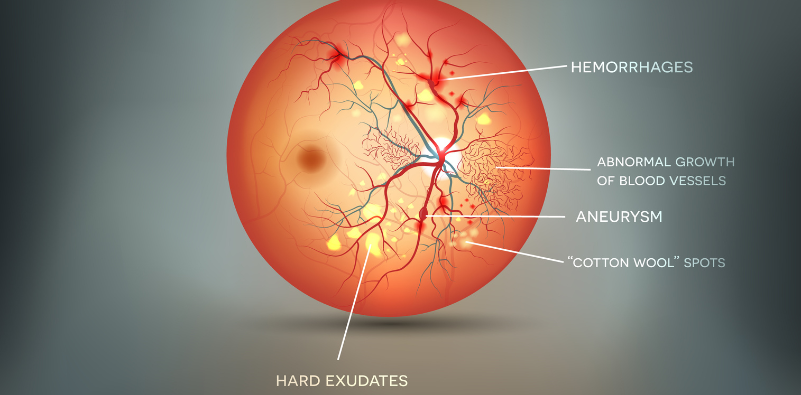
How diabetes affects vision and which diabetic retinopathy symptoms you experience depends on the stage of the condition. There are two main stages, each with different characteristics that your eye care professional looks for during an eye exam for diabetic retinopathy.
Non-Proliferative Diabetic Retinopathy (NPDR) is the earlier stage. During this phase, high blood sugar levels can weaken the walls of the tiny blood vessels in your retina, causing them to develop small bulges called microaneurysms. These weakened vessels may begin to leak fluid into the retina, leading to swelling.
As NPDR progresses from mild to moderate to more significant levels, more blood vessels become affected. When the macula—the central part of your retina that helps you see fine details—experiences swelling, it’s called diabetic macular edema. This is the most common reason people with diabetes notice changes in their vision. In the early stages of NPDR, you may not notice any diabetic retinopathy symptoms at all, which is why regular screening is so valuable.
Proliferative Diabetic Retinopathy (PDR) represents the more advanced stage where diabetic retinopathy symptoms become more noticeable. When blood vessels in the retina close off, your eye tries to help by growing new blood vessels. However, these new vessels are quite fragile—they can leak easily and may bleed into the vitreous, affecting your vision.
The growth of these new blood vessels can also lead to scar tissue forming. As this scar tissue tightens, it can pull on the retina. Additionally, when these vessels grow on the iris (the colored part of your eye), they can interfere with normal fluid drainage, leading to pressure buildup in the eye.
Diabetic Retinopathy Treatment: Taking Care of Your Eye Health

Successfully managing diabetic retinopathy and addressing its symptoms involves taking care of your overall health. We understand that living with diabetes means juggling lots of things—blood sugar monitoring, blood pressure checks, and keeping cholesterol in check. Each of these plays an important role in diabetic retinopathy treatment and keeping your vision healthy.
Keeping your blood sugar steady is the foundation of diabetic retinopathy treatment and prevention. Research has shown that maintaining consistent blood sugar levels can help reduce your chances of developing the condition and slow down any progression. Your hemoglobin A1C—which measures your average blood sugar over the past two to three months—is a helpful number to track with your doctor.
Managing your blood pressure is equally important for diabetic retinopathy treatment. When blood pressure runs high, it puts extra stress on the delicate blood vessels in your retina, which can worsen diabetic retinopathy symptoms. Working with your healthcare provider to keep your blood pressure in a healthy range through medication, diet, and lifestyle changes can really help protect your vision.
Watching your cholesterol is another piece of the puzzle when managing diabetic retinopathy. High cholesterol levels can contribute to fatty deposits forming in the retina. A heart-healthy diet, staying active, and taking cholesterol medications when needed can support both your vision and overall wellbeing.
Modern diabetic retinopathy treatment options are available when the condition progresses. These include special eye injections (anti-VEGF), laser therapy, and in more advanced cases, a procedure called vitrectomy to clear blood and scar tissue from the eye. Your eye care professional will recommend the best approach based on your diabetic retinopathy symptoms and how the condition is progressing.
Regular eye exams for diabetic retinopathy are important even if your vision feels perfectly fine. Your eye care professional can spot early changes in your retina long before diabetic retinopathy symptoms appear, giving you the chance to take action and preserve your sight.
Schedule Your Eye Exam Today

If you or a loved one has diabetes and is noticing any diabetic retinopathy symptoms—or even if everything seems fine right now—we’re here for you. At Eye Pieces Texas, our experienced team understands how important early detection and effective diabetic retinopathy treatment are for protecting your sight.
We offer thorough eye exams designed to spot diabetic retinopathy symptoms in their earliest stages, when treatment works best. Whether you’re experiencing blurred vision, floaters, or simply need a routine diabetes eye screening, we’re ready to help you every step of the way.
Schedule your consultation today at one of our convenient Dallas or Plano locations. Early detection and timely diabetic retinopathy treatment can make a real difference in keeping your vision clear for years to come.